Showing posts with label Super Arrow. Show all posts

[RANT] No Virgina... The Arrow isn't the best fighter for Canada. (But it could be something else...)


It seems that every few weeks, another discussion comes up on the BF4C Facebook group regarding the Avro Arrow.  More specifically, that an updated Avro Arrow would be the best replacement for the CF-18 Hornet.

At first glance, it does seem like an attractive option.  The Arrow was, and always will be a testament to Canadian engineering prowess.  Its resurrection could be seen as correcting a decades-old mistake. The Joint Strike Fighter has not exactly proven itself popular with Canadians, so the timing may be right to bring the Arrow back.

Except it isn't.

I have brought up the idea of a modernized Arrow plenty of times before, but let me make something abundantly clear:  THE ARROW WOULD NOT BE A SUITABLE CF-18 REPLACEMENT.  Period.  Full stop.  End of sentence.

The Avro Arrow was designed towards a single purpose, intercepting Soviet bombers before they could pose a threat to North American targets.  There is a pretty good chance it would have been great at this job.  Possibly even better than the CF-18.  That does not make it a suitable fighter for today's world, however.

Why?  Because Canada needs more than an interceptor.  It needs an honest-to-goodness multirole fighter.

The CF-18 Hornet is a pretty good multirole fighter.  Not the greatest, but pretty good.  It is a perfectly acceptable interceptor, a decent attack platform, and a respectable dogfighter.  It is not fantastic at any one thing, yet it is capable of doing just about any mission asked of it.

It its day, the F/A-18 stood out among its contemporaries (F-14, F-15, and F-16) for its versatility.  Remember, in the early 80s, the F-14 and F-15 were strictly air-superiority fighters.  Meanwhile, the F-16 would not become a true all-weather multi-role fighter until the F-16C variant.  Not so the F/A-18.  From its introduction, the F/A-18 was as comfortable slinging AIM-7 Sparrow missiles as it was dropping bombs.  Since then, other fighter designs have caught up, but the Hornet was still fairly unique at the time of its introduction.  The fact that the RCAF replaced three fighters (CF-101, CF-104, and CF-116) with a single fighter type testifies to this.

Nowadays, it seems that almost every fighter available bills itself as "multirole".  It is important to remember that very few fighters could bill themselves as such 40 years ago.  `


Of course, a lot has changed in 40 years.  The F-15 Eagle, which had been developed with the mantra "not a pound for air-to-ground" has since been developed into the formidable F-15E Strike Eagle.  Even the Su-27 Flanker's design has been tweaked into the Su-34 "Fullback".

So why not perform similar magic on the Arrow's design?

Let us just get this out of the way, the Arrow would not make a good strike fighter.  The Arrow may be big with a sizable weapons bay to carry lots of bombs.  It may be able to be fitted with targeting pods and the like.  That is not enough to make it a decent strike platform.  A proper strike fighter needs to be able to fly low, fly slow, and be able to fly enough time "on station" to provide fire support for troops below.  The Arrow's high-speed delta shape make it completely unsuitable for this. It was meant to fly fast and high, not low and slow.

A big aircraft requires a BIG HANGER (get it?)

The Arrow has other issues as well.  Namely, logistics.

Those sleek, thin wings and large size may make for impressive supersonic performance, but they come with a cost.  The Arrow needed lots of runway to take-off and land.  Operations from Canada's Forward Operating Locations would likely be a non-starter.  They would also run into some challenges operating Arrows abroad.  Not every airbase would be able to handle an aircraft like the Arrow, and even if they did, operating costs would likely be much, much higher.

Consider the CF-18's latest missions:  While Arrows may be of use in the Ukraine, they would be nearly impossible to justify in use against ISIS.

If a Canadian government did decide to resurrect the Arrow, it would still be left needing a second aircraft.  Something smaller, more versatile, and more cost effective (*cough*Gripen*cough).


Still flying after all these years, the MiG-31.

Still, with updated avionics, weapon systems, and construction methods, a revitalized Arrow is still "doable".  It would be a challenging undertaking, and in the end we might end up with something akin to Russia's MiG-31BM.

Based on the 50s era MiG-25, the MiG-31 "Foxhound" mounts a relatively huge radar and long range missiles on to an aircraft capable of Mach 3.  The west currently has no analog, but imagine an SR-71 equipped with the F-14's AGM-54 Phoenix missiles and a radar that approaches that seen in an AEW&C aircraft.  The Foxhound can detect, track, intercept, and knock-out any incursion into its airspace.

There is a "tall tale" that when the MiG-31's Zaslon radar made its public debut at the 1991 Paris Air Show, Russian experts suggested that the Americans should see how well the F-117 fared against it.  The Americans politely declined.

Russia is still enamored enough with the interceptor concept that has kept it updated and soon hopes to develop a successor to fly alongside the PAK FA and other aircraft.


No discussion about a modern-day Arrow would be complete without mentioning two attempts at resurrecting it.

The first entity trying to bring the Arrow back is one that I will refuse to name here, for reasons I will explain fully.  This first entity (which could be mistaken for a French wine-making region) has a moderately popular Facebook group and has produced a few YouTube videos.

While this attempt seems admirable at first, digging below the surface has left me unconvinced, to say the least.

While the Arrow may have been impressive in its day, this "Industrial" entity makes claims that a "Mark 3" version of the CF-105 would have capabilities that read more like "Chuck Norris Facts".

These capabilities include:

  • 80,000lbs wet thrust from two "Iroquois III turbojets".
  • Mach 3.5 top speed
  • 30mm gatling gun
  • 4 MBDA Meteor BVR missiles
  • 6 internally-mounted (???) Python IR WVR missiles.
  • 3D vectoring exhaust
The list reads more like a list of "cool things found on other aircraft".  The 80,000lb thrust provided by two engines just so happen to match the 40,000lbs of thrust provided by the F-35's single F135.  The "30mm gatling gun" obviously comes from an A-10, and the 3D vectored exhaust is all the rage with Russian fighters like the Su-35.

The six internally-mounted Pythons are a real head scratcher here.  While mounting heat-seeking WVR missiles internally is possible (see the F-22), they require a rail-launch.  This means a trapeze-style mechanism that adds complexity.  It makes more sense to simply mount IR missiles on external rails.  Meteors (or other BVR missiles like the AMRAAM) can be easily dropped out of bombay before firing engines.


It is the "Iroquois III turbojets" that really enter the realm of the fantastic here, however.  For one, Orenda, the original manufacturer of the Iroquois turbojet destined for the Arrow, is long since gone.  The Iroquois engine itself was rated for 30,000lbs, so 40,000lbs is not that much of a stretch.  But why use turbojets?

Turbojets have fallen out of use since the widespread adoption of turboprops and turbofans in the 70s.    Both offer improved efficiency and flexibility.  Turbojets still see use in cruise missiles due to their simplicity and size, but are rarely seen anywhere else.  For military aircraft, turbofans offer superior fuel efficiency (and range), a lower infrared signature, and lower noise levels.  

Maybe a modernized Arrow could reach the claimed Mach 3.5.  Even then, this would be of little use, as it would have to return to base soon after reaching that speed.  Equipped with less powerful P&W J75s, the Avro Arrow prototype had a combat radius of a paltry 660km.  To put that in perspective, all of the fighters currently being studied to replace the CF-18 easily break 1,000km.  The F-15C has a combat radius of 2,000km.

At the very least, a modernized Arrow would need an engine akin to the F-22's P&W F119 (35,000+lbs of thrust).  The trouble with this is that the F119 is substantially wider, yet shorter, than the original Orenda Iroquois.  This would require a substantial redesign of the fuselage, possibly adding drag, weight, etc.

Ugh...  Just...  No.
Things go completely off the rails when this "Industrial" entity goes into future plans for its resurrected CF-105, going into "Mk 4" and beyond.  Using old conjectural drawings (like the one seen above), this entity proposes pushing the Arrow into unbelievable levels.  

Pushing the CF-105's limits by strapping additional 4 additional ramjets (count 'em!), there is talk of getting the Arrow up to Mach 5 and beyond.  No mention of where the fuel would go to power these, however.  It should be noted that Mach 5 is considered hypersonic flight.  Current jet engine technology (including ramjets) just does not work at those speeds, as they need to slow the air down to before combustion takes place.  Hypersonic speeds still invoke plenty of challenges, and it will be some time before we manned aircraft capable of it.

I have tried to glean more information about this "Mk3" Arrow, but the operator of its Facebook page is quite evasive when it comes to direct questioning.  He (or she) makes bold claims, but offers little evidence to back it up.  Even someone with a limited knowledge of aeronautical engineering (like myself) can trip them up.

There is no corporate website, no physical address, no solid business plan, no mention of where manufacturing would be located, or even a full name.  The only strategy here appears to be "Give me some money to build the CF-105".

Normally, I could dismiss this as wishful thinking, or even plain overoptimism.  However, this person even started up a Kickstarter page, asking for backers.  Thankfully, this was unsuccessful in reaching its goal.  Kickstarter can be great when it works, but it requires little to no accountability.  Multi-billion dollar fighter programs require a lot more due diligence.  

This entity wishing to bring forward a "Mk3" Avro Arrow is misguided and overly optimistic at best.   Since they are also asking for money, there is a very real possibility that this entity could be a potential scam artist looking to capitalize on Canadian's reverence towards the CF-105 Avro Arrow.

It takes a lot more than a Facebook page and Kickstarter to develop a world class aircraft, even if that aircraft is already mostly developed.  If a major aerospace firm like Bombardier came forward and expressed a desire to rebuild the Arrow, I would be all for it, otherwise I am not convinced.

Joe Green's "Super Arrow" concept.
It should be clarified that the "Mark 3" CF-105 proposal has nothing to do with Joe Green's Super Arrow concept.  

The Super Arrow is strictly a concept.  Mr. Green came up with the idea to inspire Canadians.  The Super Arrow is an all-new design that looks towards the future instead of the past.

Impressively, Joe has managed to get the support of plenty of people who want to see the the Super Arrow get off the ground.  Scale models, a flight model for the X-Plane computer simulator, and plenty of other highlights.  Instead of simply asking for money, Joe sells Super Arrow merchandise through Cafe Press in order to fund bigger and better things.

My interactions with Mr. Green have been very positive.  He is very receptive to questions and makes it very clear that his Super Arrow is meant to inspire Canadians to think and dream bigger.

I have no problems with that at all.
Published: By: Unknown - 10:05 AM

What if... Canada developed its own fighter?


Thanks to everybody who voted in last week's "What if..." poll.  The results were pretty straight forward.  A staggering 81% of you believe that the F-35 is the wrong fighter for Canada no matter what the price.

Yikes.

The inspiration for this week's "What if..." comes from BF4C's new cover picture.  (I got a request to take down the Voodoo...)  The CF-100 Canuck remains Canada's only indigenous fighter design to make production.  While it certainly is not the sexiest aircraft design, it is still fondly remembered for its ruggedness and longevity.  The "Clunk" even managed to find a foreign buyer with Belgium.

It really is too bad that Canada's fighter industry died with the CF-100's successor, the CF-105 Arrow.

Right now, Canada's fighter selection is rather limited in variety.  While there is a substantial quantity of choices, the quality leaves a bit to be desired.  Even including two aircraft that are not officially in the running, we are limited to:

  • The expensive, unproven, and controversial F-35.
  • The 20-year-old, expensive, and trouble-prone Typhoon
  • The 20-year-old, expensive, and proprietary Rafale.
  • The 20-year-old fighter that is just a bigger version of what we already have.  (Super Hornet)
  • An updated 20-year-old single engine fighter that many dismiss as a lightweight.  (Gripen)
  • An updated 40-year-old design that was too expensive to buy the first time around.  (Silent Eagle)
Basically, it really boils down to three choices:
  1. Expensive and unproven
  2. Old, possibly expensive...  But updated
  3. Really old and expensive...  But updated.
Not exactly an embarrassment of choice.  All of the fighters are multi-role.  Some lean more towards the strike role.  Some have questionable cold-weather performance.  Two of them are single-engined and may not be safe enough.  There just does not seem to be an obvious choice.

What if we just said; "Screw it!"

What if Canada developed its own fighter?

Other nations are doing it.  Japan is building the stealthy F-3 ShinShin.  Turkey and South Korea also have plans on building their own 5th generation fighters.   

There are advantages of going with a clean-sheet design.  For one, we could design an aircraft that has Canada's needs foremost in mind.  There is also the possibility of export sales.

What should a "5th generation" Canadian designed fighter be?

Textron's AirLand Scorpion
Should it be an inexpensive aircraft that focuses on close-air support and other light duties?  Such an aircraft could also be an excellent trainer, and possibly see sales in the USAF's upcoming T-X competition.

A small, light fighter would be the most affordable to develop.  It would also serve well as a replacement for the Snowbirds' archaic CT-114 Tutors.  Such an aircraft is all you would really need to deal with asymmetric threats like those posed by ISIS/ISIL, yet far cheaper to deploy.

The trouble is, the market for light fighter/trainers is already fairly crowded.  Not only are there established models like the M-346, T-50, and BAE Hawk; but there will be two newcomers arriving soon in the form of the Textron AirLand Scorpion and the Saab/Boeing T-X offering.  

Mitsubishi F-3 "ShinShin"
There is always the possibility of entering the crowded mid-size multirole fighter market.  The JSF's troubled development does leave the door open to an ambitious competitor.  Such a fighter could steal some of the F-35's sales away if customer nations keep having misgivings about the program.

The Japanese may be doing this with their current ATD-X concept aircraft.  While Japan is still planning on buying the F-35, they really wanted the air-superiority focused F-22 Raptor instead.  The upcoming F-3 fighter (based on the ATC-X) could very well fill that role.  

Going head-to-head with the JSF's massive marketing machine is not for the faint of heart.  Not only that, but aircraft like the Typhoon, Super Hornet, and Rafale still offer compelling options.  Still, the market is huge and could be willing to pass on the troubled F-35 for a more attractive option.

Joe Green's "Super Arrow"
 Any endeavor building our own aircraft would likely need export sales in order to be feasible.  That would be a challenge in the light or mid-size multirole fighter.  Perhaps it would make more sense to enter a niche that is sadly lacking in options?

With the cancellation of F-22 production, foreign buyers looking for a larger, longer range "high-end" fighter are limited to the F-15 Eagle and variations thereof.  That is, until the Russian PAK FA and Chinese J-20 become available.

Perhaps Canada could pick up where they left off with the Avro Arrow?  A large, fast interceptor capable of supercruise and long ranges.  Some may think that the days of the interceptor are dead, but Russia seems to think different.  The MiG-31 has done quite well for itself over the years by combining fighter and ISR roles.  Russia is now working on a replacement.  

Building a modern-day Arrow would be financially challenging, even with an emphasis placed on using off-the-shelf technology in order to keep costs down.  There are plenty of air forces that could use such an aircraft, however and Canada would have no real competitors in the market.  


So what do you think?

A simple, inexpensive light fighter / trainer?
A midsize, multirole F-35 competitor?
A big air supremacy interceptor?

Please vote in the poll above, and leave your comments below.  I will go over the results next week.
 
Published: By: Unknown - 4:54 PM

You want to resurrect the Arrow? Fine! Here's how...


Some legends die hard.

It seems that nary a week goes by without a mention of the CF-105 Avro Arrow.  Not only is it revered in a historical sense, but many still think it would be the answer to our CF-18 replacement dilemma.

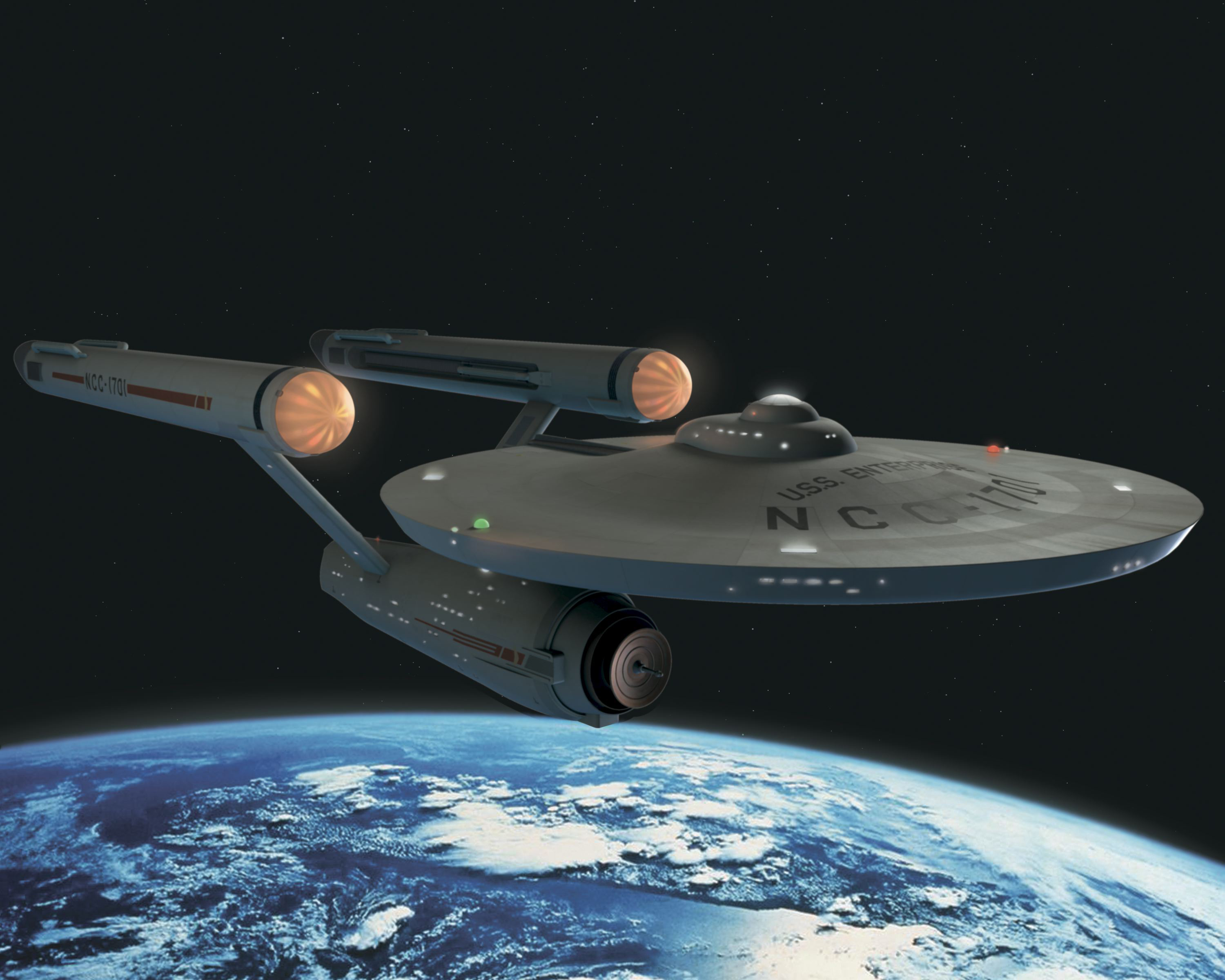
Let me get this right out of the way.  I LOVE THE ARROW.  I love the very idea of it.  Canada building a world class interceptor during the hight of the Cold War makes my inner fanboy squeal.  I also think that the Avro Arrow is, without a doubt, the most esthetically pleasing aircraft of all time.  It is simply gorgeous.  It is iconic.  Like the original iPhone, the starship Enterprise, or Jaguar E-Type; the Arrow has an elegant simplicity to its design that is made even more impressive by the wonderfulness of what lies beneath its skin.  As far as aircraft go, only the Concorde and SR-71 Blackbird come close.

Looking back, the Arrow does seem impressive, with a higher top speed than many modern fighters, and technology that seemed far ahead of its time.  So why not use an updated version to replace the CF-18 Hornet?

The CF-105 was not, nor could it ever be, a multi-role fighter.

The Arrow was an interceptor, pure and simple.  It was designed to fly very high (53,000ft+) and get there very fast.  While its performance numbers (both tested and estimated) are still very impressive, those numbers do not tell the whole story.

Those big delta wings that give the Arrow its iconic look produce incredible amounts of lift, especially at high speed.  They also stay out of the way of the aircraft's shockwave as it approaches and pasts through the sound barrier.  Unfortunately, they also create a great deal of drag at low speeds, as well as bleeding off energy during hard maneuvers.

Put simply, the Arrow would be just about terrible for low speed, low altitude missions like close-air-support.  It would also be a substandard dogfighter, even if it had a cannon.  It would also require long runways and plenty of hangar space.

Yeah.  It's THAT big.
You will also notice a disturbing lack of range.  Noticeably shorter than the F-35, and a mere fraction of what other modern fighters are capable of carrying external tanks or CFTs.

Clearly, the CF-105 Avro Arrow would be sorely uncompetitive if we simply dusted off the blueprints (if they still exist) and started production (in a factory that no longer exists).  But what would happen if we modernized it?

One way to modernize it would be to take a "clean sheet" design and reimagine the Arrow for the 21st century.  Artist Joe Green has done this with his concept, The Super Arrow.  


Joe Green's Super Arrow
There are others that imagine the original CF-105 design but upgrade it to "Mark III" and higher.  While the idea sounds impressive in theory, claims that the CF-105 would be capable of flying at speeds beyond Mach 3.5 while carrying external missiles seem optimistic.

While the heart seems to be in the right place, this comes across as more of a "wish-list" of sorts.  No specifics are mentioned other than weapons.  Those "80,000 lbs total wet thrust" Iroquis III turbojets would be more than double the thrust of the J-58s used in the SR-71 and even higher than the RR/Snecma Olympus 593 used on the Concorde  Some design choices, like external BVR Meteors and internal WVR Pythons seem downright odd.


Even upgraded with modern weapons, avionics, and sensors; it still seems doubtful that the Arrow would make that impressive of an air superiority fighter.

A "true" air-superiority focused CF-105 would have to contend with the likes of the Su-35, the PAK FA, and Chengdu J-20.  These aircraft have been shaped by over 50 years worth of continued fighter development since the Arrow.  Moreover, a modernized Arrow would have to prove itself competitive against fighters like the F-15 and Typhoon as well.  On top of that, the very idea of a 50s era fighter being able to compete in the same realm as the F-22 is, quite frankly, ridiculous.  With no thrust-vectoring, supermaneuverability, or stealth, the Arrow just does not compare.

The Avro Arrow lacks the low-level performance to be considered a proper strike fighter.  It lacks the modern technology and maneuverability to be considered an air-superiority fighter.  Its role as an interceptor seems rather quaint in an age when much smaller aircraft like the F-16 or Gripen can perform the role just as well.

So why bother?

MiG-25 "Foxbat"
While western military doctrine has abandoned the idea of the the "pure" interceptor, the type has lived on other countries.  The MiG-25 (NATO name "Foxbat"), was introduced well after the cancellation of the Arrow, and was built for 20 years.  Even after the introduction of well rounded air-superiority fighters like the F-14 Tomcat and F-15E Eagle, the Soviet Union continued the concept with the improved MiG-31 (NATO name "Foxhound").

Even to this day, after the fall of communism and the proliferation of the Su-27 and its many variants, the Russian air force continues to fly the MiG-31.  Not only that, but the Foxhound continues to receive upgrades, and a replacement is planned.

So why does Russia seem so enamored with this "obsolete" aircraft type?

Geography.

MiG-31 "Foxhound"
Since Russia (and the former Soviet Union) is so large geographically, it is impractical to depend solely on ground installations for detection against interlopers.  As such, they need to rely on more on aerial assets for defense.

Put simply, the MiG-31 has evolved into a "multirole" fighter in its own right.  Instead of being a "fighter-bomber", the MiG-31 is more of a "fighter-AEW&C".  Equipped with a massive 1.1 meter wide PESA radar consisting of both X-band and L-band transponders, the MiG-31 can track up to 10 fighter-sized targets from over 200km away.  It carries a retractable, chin-mounted IRST sensor.  It also utilizes data-links that enable it to coordinate with other fighters, ground radar installations and AEW&C aircraft.  It was also the only aircraft capable of intercepting the SR-71 Blackbird.

This is all the more impressive when you consider the MiG-31 is a 30-year-old aircraft based on a 50-year-old design.

By now, you should know where I am going with this.

Putting the pieces together...
The Arrow shares some important traits with the MiG-25, size and speed.  While it never broke Mach 2 with its J58 test engines, it was theorized that it could very well approach Mach 3 if it made production.  At 77 feet long, it is larger than both the MiG-25 and the MiG-31.  The Arrow has an extra benefit that the MiGs do not have.  A swappable "weapon pack" that could house fuel, missiles, or surveillance equipment, depending on the mission.

So what would it take to resurrect the Arrow as a NATO sourced MiG-31-type aircraft?

Construction

The original arrow utilized near all metal construction, namely stainless steel, aluminum, magnesium, and titanium.  Obviously, plenty of weight could be saved by switching to more modern carbon-fiber composites wherever possible, especially for the aircraft's exterior skin.  Not only would this save weight, but it would also have the benefit of making the Arrow stealthier than it was.

Internal hydraulics would be of course converted to a more modern fly-by-wire system (the Arrow already had a rudimentary FBW system) to save additional weight and make room for additional fuel.

Reducing weight has the dual benefit of increasing range, as well as increasing the maximum payload.

Engines

Perhaps one of the more ambitious features of the original Arrow was its Orenda Iroquois turbojet engines.  These engines would have been among the most powerful jet engines of the time.  Unfortunately, they also added an extra layer of complexity and risk to the Arrow project.  Thankfully, there are enough "off-the-shelf" options available now.

Turbojets have fallen out of favor in modern times, with good reason.  They are less flexible than turbofans, being optimized for a high speed and altitudes.  Turbofans have the extra benefit of running cooler than turbojets, as the bypass air helps cool the engine and exhaust.  Most importantly for us, a modern turbofan offers significant fuel efficiency improvements.  

Ideally, the best modern Arrow engine would likely be the Pratt & Whitney F119 as used in the F-22 Raptor.  It is roughly the same size as the Iroquois, yet boasts slightly more thrust (35,000lbs vs 30,000lbs).  It also allows for supercruise speeds.  The vectored thrust nozzles would be an extra benefit.  As an alternative, the GE F110 would be an excellent choice, again offering more power (32,000lbs) in a easily accessible and proven package.

Sensors

If there is one area to splurge, this is it.  Designs like the PAK FA and J-20 illustrate the fact that stealthy aircraft could very well make up a future threat.  

The Arrow's generous nosecone dimensions should be able to fit a modern AESA radar, roughly the size of the MiG-31's.  At current time, there appears to be no western equivalent to the MiG-31's Zaslon.  Instead, perhaps we could incorporate an "upsized" version of the Eurofighter's CAPTOR-E, complete with repositioner.  This is similar in concept to the APG-82 currently being fitted to the F-15C.  It uses the Super Hornet's processor with a larger dish.  

Like the MiG-31, an IRST sensor should be included.  A modern HMD, data links, and the like as well.  

Weapons

Currently, the west has no missile analogous to the MiG-31's R-37.  The older R-33 is roughly equivalent to the long-range AIM-54 Phoenix, but the R-37 is an updated version in much the same way as the AIM-120 AMRAAM is an updated AIM-7 Sparrow.  Dubbed "the AWACS killer" the R-33 can shoot down larger aircraft from a distance far enough to avoid any escorts.  

This capability would need to be matched with either an updated Phoenix, an entirely new missile, or perhaps a existing missile, such as the AMRAAM or Meteor, equipped with a second stage "booster" rocket of some kind.  

At the very least, provisions should be made for 4 BVR AMRAAMs or Meteor carried conformally, similar to that of the Eurofighter Typhoon.  Given the mission profile, no cannon would be needed.  Ideally, 2 WVR missile stations would be added as well.  This adds minimal drag, and would free up the Arrow's "weapons pack" for other things.

Despite the Arrow being developed as an interceptor, many remarked that it would have made an impressive light bomber as well.  For this, the Arrow could be fitted with long range ALCMs like the AGM-158 JASSM or the Storm Shadow.  Close air support operations are probably still best left to other aircraft however.  


Multi-mission pack

Instead of a "weapons pack", the Arrow would instead utilize a modular "multi-mission pack" that could be swapped out depending on the mission.  Variations of this could include:  
  • A module outfitted with additional air-to-air weapons
  • A module outfitted with air-to-ground weapons and a targeting pod
  • A reconnaissance module with cameras and/or other surveillance equipment
  • An electronic warfare module, with jammers and possibly anti-radiation missiles.
  • Possible future upgrades, such as DEW weapons.

Other features

An aerial refueling probe would be mandatory of course.  

A possible redesign of the engine inlets as well, either incorporating a variable ramp to improve performance at high-speed, or a divertless inlet to improve stealth.  

Modern ECM, RWR, towed decoys, and other countermeasures would be a must-have, of course.  Possibly even a DIRCM system.


This is all speculation and estimation, of course.  It seems unlikely that the Arrow will ever live again as a military project.  The current trend in military spending is seemingly no spending at all.  With the CF-18 replacement pushed off until the 2020 time frame, it seems unlikely that a larger fighter-type aircraft would be chosen to operate alongside it.  

Then again, maybe somebody might just figure out that those Russians are on to something.
Published: By: Unknown - 9:03 PM