Showing posts with label Fighter Jet Fight Club. Show all posts

Fighter Jet Fight Club: Epilogue


WARNING:  THE ABOVE VIDEO CONTAINS SPOILERS!
(Seriously though, the movie's 15 years old, go see it already!)

So that's it.  

After weeks of pitting various fighters against each other, the dust has finally cleared and we are left with...  What exactly?

I would like to be able to say that after examining all of the aircraft potentially available, one aircraft has stood out.  That aircraft enjoyed an undefeated streak in FJFC and is unequivocally the best fighter for Canada.

I would like to say that...  But I can't.

I am no expert.  I have no inside knowledge about these aircraft, their systems, nor their operating procedures.  What I have is access to is the information that if publicly available to anyone with an internet connection.  In other words, all comparisons were made based on the obvious. 

Does that mean "Fighter A" is better than "Fighter B"?  Of course not.  My scoring was basic.  It did not take into account the nuances of modern fighter aircraft operations.  I arbitrarily gave more weight to air-to-air combat despite the fact that strike operations have been significantly more important in a post-Cold War world.  Logistics and flexibility concerns have far more importance than an aircraft's dogfighting capability.

The truth is, the best fighter is not the one that goes faster, turns harder, or shoots further.  The best fighter is the one flown by the best pilot, with the best support, in the greater numbers.  Allied air victories over Iraq and other hostile nations have had more to do with this simple fact than F-15s and F-16 being superior to MiG-29s.  In fact, the results likely would have been similar if competing air forces switched aircraft inventories.  Training and tactics will win the day, not technology.  (Within lints, of course.  This does not mean 100 Spitfires flown by aces will beat 50 F-22s flown by average pilots...)  Allied air victories over Iraq and other hostile nations have had more to do with this simple fact than F-15s and F-16 being superior to MiG-29s.

It was not my desire to mislead anybody.  My only desire was to (hopefully) make for interesting reading while providing this blog with content over the usually dry summer months.  (Given the now infamous F-35 engine fire, I shouldn't have worried!)  More importantly, I wished to spark conversation.  With that, I can easily declare success.  Most installment would garner at least 100 comments or more, some in agreement, some not, and many bringing interesting new facts to the table.  

I have spent countless hours researching all of these aircraft, yet almost every installment found me learning something new.  I have a new found respect for these jets, and I hope you do to.  


Okay...  Fine...  For those of you looking for something a little less anticlimactic, here are the final standings:

F-35:  1 win  -  4 losses
F-18E/F:  1 win  -  4 losses
F-15SE:  3 win  -  2 losses
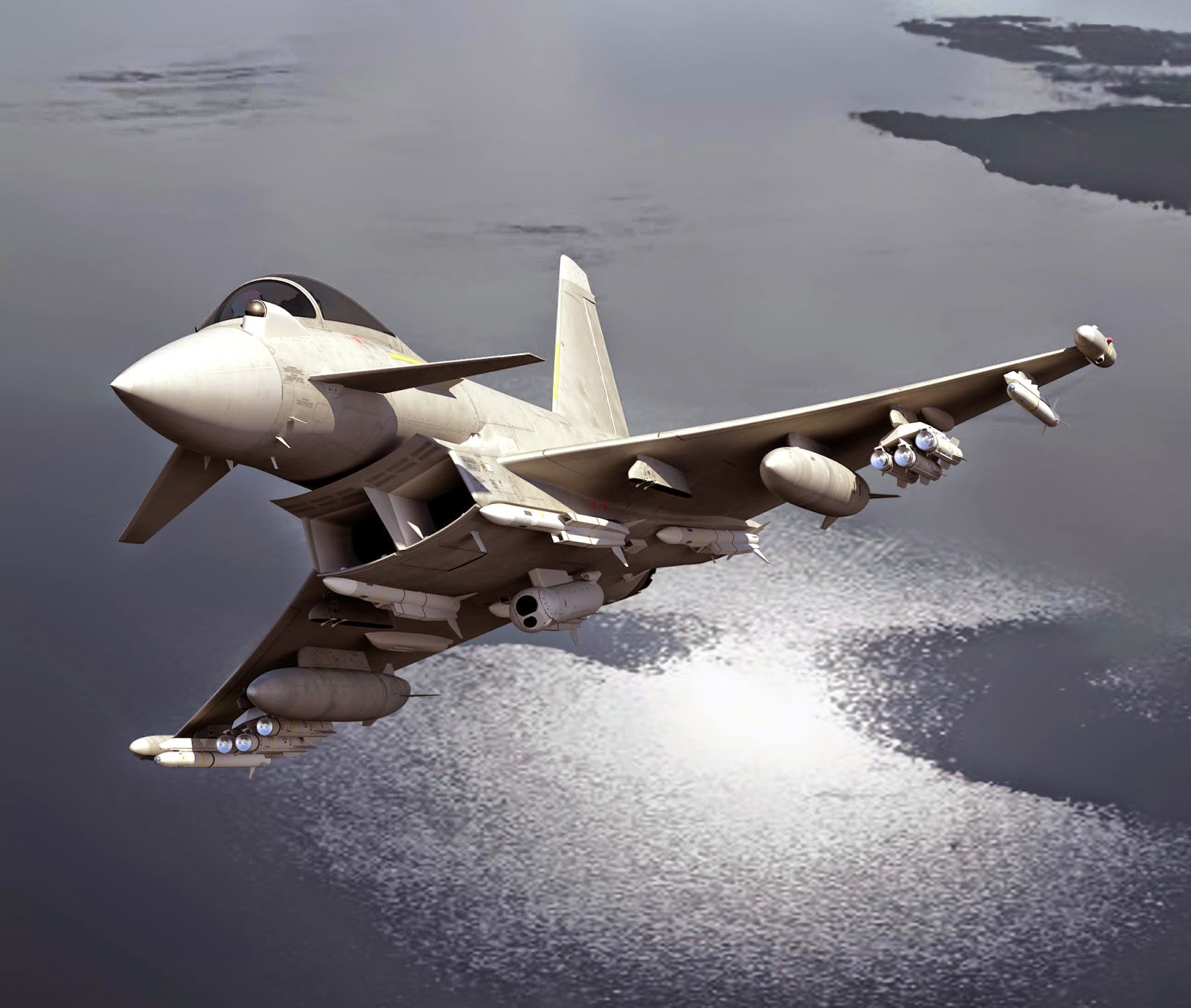
Typhoon:  4 wins  -  1 loss
Rafale:  2 wins  -  3 losses
Gripen:  4 wins  -  1 losses


Does this mean that the Eurofighter Typhoon is better than the Rafale, F-15SE, and others?  Absolutely not.  For one, much of the Typhoon's superiority stemmed from the inclusion of CFTs, Meteor missiles, the CAPTOR-E radar, and Brimstone missiles.  These are all features that are planned for the Typhoon, but not yet in operation.  Conversely, the Rafale was often hit by its lack of HMD and limited weapon selection.  These weaknesses are easily corrected.

I will also be honest, I have deep liking for both the Typhoon and Gripen.  My bias is quite likely partly responsible for their scoring.  Feel free to use your own biases to prove me wrong.

FJFC also never took into account reliability or costs.  This was by design.  To put it simply, cost and reliability are possibly two of the most important metrics of military equipment.  This goes double for nations like Canada, who have to make the most out of their military budgets.  We can afford to buy less equipment, which means we have a smaller pool of spares when things inevitably break.

I also intentionally ignored whether or not an aircraft had a feature that was pertinent to Canada.  For example, Canada has no need for STOVL, electronic warfare, or even carrier variants.  These are all "nice to haves" but not "need to haves".  The need for "first day of war" stealth capability seems equally dubious.

In truth, any of these fighters would likely serve Canada well.  The RCAF has the luxury of being part of a much larger whole (NATO and NORAD).  That means that whatever resources Canada has will be reinforced by nations with much greater military budgets.  This means that the best fighter for Canada need only worry itself about two main concerns:

  1. Fending off any incursion long enough for the cavalry to arrive.
  2. Participating in coalition actions in order to assist others.
Pretty basic needs, eh?  

As I have written before, Canada has some difficult choices to make.  We simply do not have the budget to fill our undernourished military with top-tier equipment over the next 10-20 years.  Every dollar spent on new fighters will be one less dollar available for new ships, new helicopters, or new UAVs.  

Knowing that, the question is not about which fighter rules the skies, but which fighter provides the most "bang for the buck".  That pretty much narrows it down to two fighters, the Boeing Super Hornet and the Saab Gripen.  Sorry Rafale fans, but the French fighter requires too much "Canadianizing" (HMD, weapons, etc).  Between the Gripen and the Super Hornet, I still prefer the Gripen.  It would likely cost more to acquire than the Rhino, but would likely cost far less to operate over the next 30-40 years.  The Advanced Super Hornet looks promising, but would likely require a substantial USN purchase to cover development costs in order to become financially feasible for Canada.  

In every FJFC installment, the Gripen did well.  Its versatility and small logistic footprint often made up for its lack of payload and smaller size.  More importantly, it easily has the lowest operating costs of any of the fighter compared.  This frees up funding for more training, future upgrades, and allows the possibility of procuring a larger fleet.  

Much like the split personality protagonist in Fight Club, it turns out "Best Fighter for Canada" was really just an aspect of "Gripen for Canada" all along...

Yup...  Still my favorite.

Thanks for reading.  While FJFC may be at close, it is by no means the end.  I intend to keep going until at least a Canadian fighter purchase is finalized.  Tune in Monday for the first installment of "Mythbuster Monday".  
Published: By: Unknown - 2:08 PM

Fighter Jet Fight Club: F-35 vs. Gripen


Funny how things go full circle.

When I started gripen4canada.blogspot.ca a few years ago, I was convinced that the Gripen NG (now Gripen E/F) would be a much more suitable replacement for Canada's aging CF-18s.  Much has changed since then, and I have attempted to broaden my scope to look at other fighter aircraft in order to find the "best fighter for Canada".

Anyone following the Joint Strike Fighter's saga over the years knows that it is a troubled program.  Despite assertions of progress from both Lockheed Martin and the Pentagon, there is no escaping the fact that the F-35 is still nowhere near the fighter it is supposed to be.

When I devised "Fighter Jet Fight Club" I decided that I would need to compensate for the F-35's issues, otherwise I would be shot down as clearly biased against it.  In order to do this, I added two rules:

  1. All equipment will work "as advertised".  No buggy software, etc.
  2. Cost is not considered.
My reasoning was simple:  How well would the JSF compare to other fighter aircraft if you removed its two biggest Achilles' Heels?  

These two little rules seemed to have worked.  They worked so well that I was actually accused of being biased towards the F-35 by a fairly well established blogger (Don't worry, Eric and I are on good terms now).  Mission accomplished.

Unfortunately for the F-35, the handicapping has not been enough.  When compared directly against other fighter aircraft, it has almost always disappointed.  Its only "win" thus far has been against the Super Hornet, and that was by a slim margin.  The JSF's stealth has certainly helped it, and there is no arguing its versatility, but its compromised design results in it falling behind other aircraft's performance.

The Gripen?  The feisty little Swede performance in FJFC has been rather anti-climatic.  Its FJFC record of 2:2 make it seem rather mediocre.  In many ways, it simply cannot compete with larger, more powerful aircraft like the Typhoon or Silent Eagle.  Then again, the same rules that help the F-35 end up hurting the Gripen somewhat.  By ignoring cost, we cancel out the Gripen's most endearing aspect.  

Keeping that in mind, how well does the F-35 compare to the Gripen when everything works and cost is no object?  Let us find out!

Air to ground:

Interdiction/Penetration:  The F-35 has always won this category.  As the only true "stealth" fighter available, it simply dominates here.  Other aircraft can be fitted with ECM or other radar evading techniques, the fact remains that the F-35 will be the hardest to detect.  Even if modern radar technology makes the JSF's stealth less relevant, it will still have an advantage over less stealthy aircraft.  

The Gripen does well for a non-stealthy aircraft.  Its small size and construction helps it reduce its RCS.  It also has an extremely small IR signature compared to other fighters in the segment.  Gripen Es will have sophisticated countermeasures and expendable decoys.  It will be the first aircraft to employ Gallium Nitride as a way to boost power to its electronic warfare systems.  

For sneaking past enemy detection, the Gripen is good, but the F-35 is great.  Advantage:  F-35

Deep Strike:  The F-35 carries 50% more internal fuel than the CF-18.  Its proponents often bring up the fact that it has no need for external tanks.  What they neglect to mention is that the JSF cannot carry external tanks.  External tanks have been envisioned and even tested in the wind tunnel, but "separation issues" have scuttled the possibility of an extended range F-35 for the foreseeable future.  The JSF has a range of 2,220km.  It should have the capability of mounting the 1,000km+ range AGM-158B JASSM-ER ALCM, however.  This would greatly enhance its effective strike range.

Older Gripens have a reputation for being a short-ranged fighter.  This has been addressed with a vengeance in the Gripen E/F models.  Saab increased internal fuel capacity by 40%.  They have also developed 50% larger external fuel tanks.  With these improvements, the Gripen E is now capable of traveling over 4,000km between fill-ups.  The Gripen lacks compatibility with the JASSM-ER, but it does make do with the 500km+ range Taurus KEPD 350.  

Both aircraft will have their range reduced somewhat by carrying external stores.  Big missiles (for both) and big tanks (for the Gripen) add a lot of weight and drag.  Things get even fuzzier when you consider that the F-35 may not even get the JASSM anytime soon, merely "eventually".  Given the Gripen's ease of weapon integration, the JASSM-ER certainly does not seem out of the question for it.  

Considering how fuzzy this category is, it could go either way.  If the F-35 were to get external tanks to go alongside the JASSM-ER, it wins.  If the Gripen gets the JASSM-ER, it wins.  As it stands now, the difference in ranges is not enough to declare either aircraft the victor here.  Advantage:  Tie

Payload:  The F-35 has 4 internal hardpoints located inside its weapon bays.  The wings can mount an additional 3 hardpoints each for a total of 10.  Altogether, the JSF can carry an impressive 18,000lbs worth of ordinance.  It is limited somewhat, however, as the internal bays are limited in their size and shape.  Two of the internal pylons are for AMRAAMs only, and larger missiles (like the JASSM-ER) will need to be mounted on the wings.  

The Gripen has just as many pylons as the F-35, but its payload is limited to a little over 15,000 pounds.  An impressive number, but not enough to compare to the F-15Es and Rafales of the world.

Both aircraft are single engine, but the F-35 uses a much larger single engine.  This makes for a larger aircraft capable of lugging a heavier payload.  Advantage:  F-35

Close air support:  Much has been said about the A-10s retirement in favor of the JSF taking over its close-air-support role.  So much, that it does not need repeating here.  What does need to be said is that the F-35 is a fragile aircraft, incapable of withstanding small arms fire.  In order to perform close-air-support, it flies high above the battlefield and uses its EOTS to find targets.  When a pilot cannot put their own eyes on a "danger close" target, bad things can happen.

While the Gripen is no A-10, it does have some impressive close-air-supprt capabilities.  Being a close-coupled-canard design gives it impressive low-speed handling.  The Gripen also tucks away a heat exchanger and exhaust vent right behind the cockpit.  This keeps the aircraft's IR signature down and improves survivability against MANPADS.  The Gripen is also capable of operating from austere conditions, allowing it to be based much closer to the action.  It even has an impressive close-air-support weapon selection, which includes guided bombs, rocket pods, and the Brimstone missile.

For close air support, the Gripen is certainly an excellent choice.  Unlike some newer aircraft, it can actually put the "close" in "close-air-support".  Better still, it has a plethora of "low collateral damage" weapons to choose from.  Advantage:  Gripen

Air to ground winner:  Both aircraft promise ground attack capability with their very designation.  Joint STRIKE Fighter for the F-35.  Jakt (air-to-air), Attack (air-to-surface), and Spaning (reconnaissance) for the JAS 39 Gripen.  The JSF places more of a priority on the strike role, however.  Its ability to penetrate enemy defenses and carry more bombs than the Gripen give it the win here...  But barely.  Something as simple as JASSM-ER integration with the Gripen would give the Saab a clear advantage in the "Deep Strike" category and tie things up.  Until then, the F-35 comes out on top here.  Winner:  F-35

Air to air:

First look, first kill:  With its stealthy shape and advanced sensors, the F-35 can dash through the air akin to some sort of "sky ninja", taking its opponents out unseen like a shadow in the night.  That is what the JSF marketing seems to imply, anyway.  The truth is that the F-35 has a slightly-above-average radar (the APG-81) and the equivalent to an IRST (DAS) built into a airframe that just so happens to offer a smaller RCS than most.  It is still quite visible in the IR spectrum.

With no faceted "stealth" design, the Gripen's RCS is larger than the F-35's.   The Gripen likely has a smaller IR signature, however, due to its smaller engine and less draggy shape (drag=friction=heat).  As for radar, the Gripen's ES-05 Raven AESA array is roughly the same size as the F-35's but it has a swivel plate than enables a much wider field of view.  The Gripen is also equipped with an IRST.

The F-35 will likely be the first to see its opponent thanks to its stealthy shape, good radar, and DAS. This does not guarantee victory, however, as the JSF needs to get in fairly close in order to shoot its AMRAAM.  The F-35 pilot would need to weigh the risks long distance missile shot with a reduced probability of kill or getting in close and risking detection.  Advantage:  F-35

Beyond Visual Range:  The F-35 carries the well known AIM-120D AMRAAM inside its weapon bays.  While "the specs" list a range of over 180km, the actual useful range is much lower.  Especially against an opponent with RWR (radar warning receivers), a skilled pilot, and countermeasures.  If the missile is fired too far away, it can be easily outmaneuvered.  If the F-35 gets too close, it can be detected by IRST or possible even radar.  Complicating matters is the AMRAAM's actual combat record.  Since its adoption, the AMRAAM has shown a pK (probability of kill) of less than 50%.  Those targets had no countermeasures, were not maneuvering, nor were they even engaging the firing aircraft.  One was a friendly fire incident.

If the JSF pilot wants a realistic chance of bringing down the Gripen, they will have to get uncomfortably close to being detected.  If the Gripen's pivoting AESA radar, IRST, and radar warning receivers (RWR) pick up the F-35's approach...  All bets are off.  With is ability to supercruise and a faster dash, the Gripen has the speed to outrun the F-35.  It also carries the MBDA Meteor missile, which has a much larger "no escape zone".

Getting the drop on the enemy is a distinct advantage, but it does no good if one cannot follow through.  The F-35 is severely hampered by its slower speed and shorter ranged AMRAAM.  Most likely, the best it can hope for is one good shot (with a pK of less than 50%).  As soon as the Gripen detects an F-35, it has the advantage.  Its pilot has the choice of either engaging with its longer range Meteors, or closing the distance to the point where the JSF's reduced RCS is no longer relevant.  Advantage:  Gripen

Within Visual Range:  The F-35's stealth advantage completely disappears in a WVR scenario.  Its big, hot engine is easily visible to IRSTs and heat-seeking missiles.  The JSF does have the most advanced helmet mounted display (HMD) on the market and its DAS (distributed aperture system) gives it a true 360° view around the aircraft.  The real kicker would be whether or not the F-35 is carrying WVR missiles.  When in "stealth mode" the JSF carries 2-4 AMRAAMs internally.  Any IR guided missiles need to be mounted on stealth-robbing external pylons.  Yes, radar-guided AMRAAMs can be used at WVR ranges, but IR guided missiles (like the AIM-9X Sidewinder) have a higher probability of kill (pK) as well as faster "lock-on" times.  

Meanwhile, the Gripen will almost always be carrying at least two wingtip mounted IR missiles.  These could be Sidewinders, IRIS-Ts, ASRAAMs, Python 4/5s, or even the Brazilian A-Darter.  These can be fired with the assistance of IRST and HMD, much like the F-35.  The Gripen also happens to be quicker and more agile than the F-35 thanks to superior thrust-to-weight and wing loading numbers.  Its smaller IR signature gives it an advantage here.

This one is no contest.  Even if the F-35 is carrying IR-guided WVR missiles, it would be at a disadvantage against the Gripen.  Advantage:  Gripen

Dogfight:  When specifications were being written for the Joint Strike Fighter, planners must have forgotten the lessons learned over Vietnam.  The dogfight was considered "obsolete" thanks to the age of guided missiles.  American pilots soon realized that guided missiles did not work as advertised and that a gun is very much a necessity.  The F-35A has a 25mm gun, but the B and C models do not (a gun pod is being planned).  The JSF also suffers from poor visibility and is unlikely to withstand much damage, thanks to the removal of fire suppression gear to save weight.

The Gripen is equipped with a 27mm cannon on all single seat models.  It is an excellent performer at low speeds and high angles of attack.  Its smaller size makes it a harder target.  It does lack a true "bubble" canopy, but the only blind spots are the frame and at the very rear where the pilot's head cannot turn anyway.  The single, vertical tail also blocks the pilots view far less than twin canted tails do.  

In a dogfight between an F-35 and a Gripen, it really is hard to imagine the JSF coming out ahead.  The F-35 pilot will want to avoid close encounters of any sort.  Advantage:  Gripen

Air to air winner:  In a hypothetical aerial engagement between an F-35 and a Gripen, the F-35's best chance is to catch the Gripen unawares and end things quick.  This is easier said than done, as it would require getting uncomfortably close.  Anything other than a sneak attack favors the Saab.  It is quicker, more agile, and fields a superior choice in missiles.  Winner:  Gripen

Versatility/Logistics:

Versatility:  As much criticism as the F-35 receives, few have complained about its lack of versatility.  Quite the opposite.  The JSF's very raison d'être is to be whatever you need it to be.  It can perform air-superiority, strike, reconnaissance, and plenty of other duties.  If needed, there are STOVL and CATOBAR capable versions available.  It lacks a two-seater version, however, an omission that limits its use for training and high-workload missions.  The F-35 is also quite proprietary in its design.  Users who wish to add their own weapons or perform modifications to the hardware or software need to do so with the Pentagon's and Lockheed Martin's permission.  

The Gripen is equally comfortable performing air-superiority, strike, or reconnaissance missions.  It lacks a STOVL version, but a CATOBAR capable "Gripen-M" seems increasingly likely.  The Gripen  is also much more "open source", offering full technology transfer and easier weapon integration.

STOVL has its uses, but the strategic value of placing multimillion-dollar fighter jets in the front lines is dubious.  Given real-life conditions, it is much more practical to have access to a two-seater aircraft for training and the like.  It may not seem as glamorous, but most air forces have no need for STOVL or CATOBAR capability.  This gives the Gripen more "real world" versatility.  Advantage:  Gripen

Logistics:  Even if the F-35 does not sell at original estimates, it will be built in the thousands and see use all over the world.  Parts should be plentiful and there should be no lack of qualified technicians.  The aircraft's stealth characteristics complicate matters somewhat, however, as it requires additional security and other special considerations.  Australian documents suggest that the F-35's radar absorbent skin can be damaged if left in direct sunlight too long.  Cold weather testing has yet to be done.  The F-35A also requires at least 8,000 feet (preferably 10,000) of runway to take off and land safely.  Austere airfields need not apply.

While the Gripen will never likely reach JSF-like sales, it does see service around the world.  It is especially popular with smaller air forces on a fixed budget.  Weather conditions do not seem to be a factor, as it sees use everywhere from Sweden's arctic to Thailand.  Maintenance is made easier by easy to access systems utilizing plenty of "off-the-shelf" parts.  A team of six can refuel and rearm a Gripen within 10 minutes.  Not only that, but the Gripen can operate from a mere 2,400 feet of straight highway, and get serviced from a truck.  It is the farthest thing from a "hanger queen" a modern fighter can get.

The F-35 may find itself in service all over the world, but it will likely be a challenge to keep up with its needs.  The Gripen, on the other hand, seems ready to go anywhere, anytime.  Advantage:  Gripen

Versatility/Logistics winner:  There is little doubt that the Gripen would be much easier to live with.    Its ability to operate from austere conditions is a huge benefit for air forces on a budget.  For those nations that have no use for CATOBAR or STOVL capability, the Saab makes an easy fit.  There may be a CATOBAR version soon.  The F-35 has STOVL capability, but lacks a two-seater version and the F-35A needs a full service airbase.  Winner:  Gripen


Final Score:

Air to ground:  F-35 = 3  -  Gripen = 2
Air to air:  F-35 = 1  -  Gripen = 3
Flexibility/Logistics:  F-35 = 0  -  Gripen = 2

Final result:  F-35 = 4  -  Gripen = 7

Both of these aircraft were envisioned as affordable single engined fighters that could perform multiple roles effectively and efficiently.  Yet something seems to have been lost in translation with the F-35.  It simply tries to do too much.  Whilst the JAS-39 takes a more minimalist approach, the JSF takes on a substantial amount of "feature creep".  Not only is it a multirole fighter, but it needs to make compromises for stealth, STOVL and CATOBAR capability.  Anyone with the slightest amount of engineering skill could tell you that there are no "free lunches" here.  All these extra features result in increases in cost, weight, and complexity.  More worrying about the F-35 is its complete and utter dependence on stealth.  Without this advantage, it becomes rather unimpressive.  Its performance is roughly equivalent to Canada's current CF-18 with upgraded avionics, but without the capability of operating from shorter airfields.   

While the Gripen may lack the payload and stealth of the F-35, it can still perform a variety of strike mission effectively.  Some missions, like close-air-support, are more suited to the Gripen.  In the air, the Gripen makes up for its perceived stealth deficit by being faster, more agile, and mounting better missiles.  If that was not enough, it can operate in less-than-perfect conditions and its simple to maintain.  Its faster and more maneuverable, yet still cheaper to operate.  It may not be the best aircraft for heavy bombing or "first day of war" operations, but it is fully capable of meeting an air forces needs otherwise.  

Before taking costs and reliability into account, the Gripen is still the more useful aircraft.  

Once costs are considered, things become even more lopsided.  The JAS-39's operating costs are estimated to cost ¼ that of the F-35.  There is serious doubt over whether the USA can even afford the F-35's high operating costs, as the JSF costs more to operate than the aircraft it replaces, including the F-15C.  More worrying is that many parts need to be replaced 15-16 times more often than anticipated.    

By sticking to the basics, the Gripen proves that a modern multirole fighter can be effective and affordable.  In a way, it is the antithesis to the F-35 Lightning II and all its problems.


And so goes the last bout of Fighter Jet Fight Club.  There will be one final installment that will attempt to make sense of the whole thing, coming soon.  Until then, as always, feel free to comment.  
Published: By: Unknown - 8:04 PM

Fighter Jet Fight Club: Typhoon vs. Silent Eagle!


When the UK, Spain, Germany, and Italy got together to design the Eurofighter Typhoon, one wonders why they simply did not decide to procure the F-15 Eagle instead.  Instead, they decided to to go one better and develop a new medium-sized multirole fighter.  In theory, this had the benefit of both producing a fighter for the 21st century (hence the "Eurofighter 2000" moniker) as well as keeping the European aerospace industry up to date.

Did they succeed?  In a word...  Yes.  But not without difficulty.  The Typhoon program has been beset with cost overruns, maintenance issues, and dissent among the partner nations.  Much of this is due to simple timing.  With the Cold War ended, many questioned the need for a cutting edge fighter. In recent years, economic concerns have led to austerity measures.  Now, the Eurofighter partners are looking for foreign buyers to help breath new life into the Typhoon.

The F-15 had no such issues.  As the USAF's "golden child" it has received plenty of funding and upgrades over the years.  Plenty of foreign sales have resulted in the F-15 becoming the "big stick" of western airpower.  Its undefeated combat record speaks volumes, and when F-22 production was cut short, the mighty Eagle has continued its air-superiority role.

The Eagle's halcyon days are coming to an end, however.  The USAF sees the F-35 as its future, with the F-15 taking more of a supporting role.  Boeing would very much like to keep the Eagle flying, so it has come up with a "last hurrah" variant in an attempt to keep production going just a little longer.

Both of these aircraft have been overshadowed by newer "5th generation" fighters, but how do they compare with each other?

Once again, here are the rules.

Air-to-ground:  

Interdiction/Penetration:  The Typhoon was designed with an eye towards reducing its RCS.  This was done by using lots of non-metallic materials in its construction.  It also uses plenty of active countermeasures, like towed decoys and the like.  It is not a "stealthy" aircraft, but it does not light up enemy radar like a Christmas tree, either.

The Silent Eagle has been thoroughly "stealthified" by adding radar absorbent material, internal weapon carriage, and a few other tricks.  This only works from the front aspect however.  From the sides and from the back, the F-15SE is still rather unstealthy.  

Since ground radar is likely to first see an approaching aircraft from the front aspect, the F-15SE has an edge here.  Advantage:  F-15SE

Deep Strike:  When it comes to range, both fighters make out quite well.  Both have options of conformal fuel tanks or external drop tanks.  

The F-15SE is a bigger fighter, however, able to carry more fuel both internally and externally.  It also has the advantage of being one of the first fighters to utilize CFTs.  Its system has been well proven whereas the Typhoons is still in development.  Advantage:  F-15SE

Payload:  This category has almost always worked out in the Silent Eagle's favor, and today is no different.  The Silent Eagle, like the Strike Eagle it is based on, is big fighter-bomber in the same category as the FB-111 and others.  No surprise here.

The Typhoon does carry up to 16,500lbs worth of bombs, but that is only enough to beat out the smaller Gripen.  Against the 23,000lbs payload of the F-15SE, it is simply outclassed.  Advantage:  F-15SE

Close air support:  Let us be clear, neither of these aircraft would make for good close air support were it not for targeting pods.  Without them, these aircraft would be playing "best guess" from over 30,000ft with 500lb bombs.  Not exactly optimal when troops on the ground are "danger close".  

With the targeting pods, these aircraft have a much better chance of putting its ordinance where it needs to be.  But what about the ordinance itself?  With the addition of low-collateral damage Brimstone missiles, the Typhoon can take out targets effectively without the blast radius of bigger bombs or missile like the AGM-65 Maverick or even the GBU-39 Small Diameter Bomb.

Sometimes, it is preferable to drop a bullet with the bad guy's name on it instead of a bomb inscribed "to whom it may concern".  Advantage:  Typhoon

Air to ground winner:  There really should not be much of a surprise here.  While the F-15 may have started out as a "not a pound for air-to-ground" fighter, it has evolved into a potent strike aircraft.  The Typhoon simply does not have the Silent Eagle's size advantage, nor RCS reduction measures.  Winner:  F-15 Silent Eagle

Air to air:

First look, first kill:  From the front, the Silent Eagle keeps a low profile with its missiles tucked away inside it conformal weapon bays.  It also happens to have a huge AESA radar tucked under that huge nosecone.  This low RCS profile drops with the angle of approach, as the F-15SE is still very much an F-15 when viewed from the sides.

The Typhoon keeps its BVR missiles external but they are not exactly hanging in the breeze.  They are stored conformally to reduce drag and radar cross section.  In its nosecone, the Typhoon mounts a CAPTOR-E AESA radar that is similar in size to the F-15SE's.  The CAPTOR-E has the extra benefit of a rotating mechanism that gives it a wider field of view, however.

The Typhoon likely has inferior RCS from the front.  It has a distinct advantage from the sides thanks to its swiveling radar, however.  This big advantage here more than makes up its disadvantage from the sides, giving it the nod here.  It is close, however.  Advantage:  Typhoon

Beyond visual range:  The F-15 has become a legend with its over 100-0 win/loss record in air to air combat.  Many of these victories were beyond visual range.  Keeping that in mind, we realize that the F-15SE truly is the one to beat here.

The Typhoon seems up to the task however.  Not only does is mount a slightly better radar, but it mounts the MBDA Meteor, aka the "next big thing" in BVR missiles.  The Typhoon does not have the same Mach 2.5 top speed as the Eagle, but does have a faster climb rate and a the ability to supercruise.  Top speed is a nice gauge of fighter performance, but it really is academic as achieving that speed wastes fuel.  While the Typhoon can engage at Mach 1.5, the Eagle would be spending most of its time subsonic with several "sprints" breaking the sound barrier.

With a slightly better radar, better missiles, and a higher "real world" speed, the Typhoon wins this one.  Advantage:  Typhoon

Within visual range:  After fighters like the F-4 provided disappointing BVR performance over Vietnam, fighters like the F-15 went "back to basics" with a renewed emphasis on WVR combat.  The F-15 is highly maneuverable with a fantastic power to weight ratio.  The Silent Eagle adds HMDs and an IRST to make high-off-boresight (HOBS) missile targeting a snap.

The Typhoon has a similar HMD and IRST set up.  On top of that it is an absolute demon in close-combat with a higher thrust-to-weight ratio, lower wing loading, and a control canard setup that allows for near-instantaneous changes in pitch.  The Typhoon happens to be smaller as well.

The F-15SE is no slouch in WVR combat, but the Typhoon simply better.  Advantage:  Typhoon

Dogfight:  The F-15SE is bigger, tougher, and carries a lot more ammo for its 20mm vulcan cannon.

The Typhoon is smaller, more agile, and carries a bigger gun (27mm) with less ammo.

I am not exactly sure how these two would fare against each other.  What I do know is that such a confrontation would be epic.  Advantage:  Tie

Air to air winner:  The F-15 started out as a strictly "not a pound for air-to-ground" air-superiority fighter.  Through the years, it has evolved into a very respectable bomber.  In doing so, its air-to-air prowess has become less of a priority.  While fighters like the Su-35 have gotten thrust vectoring and other features to improve performance, the F-15 has to make do little more than an AESA radar upgrade.

The Typhoon has kept its focus on air-superiority with strike capability secondary.  Thrust vectoring is being studied for it, but some believe it is not even needed given its already impressive performance.  Add impressive missiles like the Meteor to the mix and you have a true world-beater.  Need more proof?  Two words:  "Raptor Salad".  Winner:  Typhoon

Versatility/Logistics:

Versatility.  If you are looking for a carrier-capable fighter, look elsewhere.  Do you need STOVL capability?  Move along.  Do you need a dedicated EW platform?  Nothing to see here.  These fighters are capable of air-to-air combat and air-to ground combat.  That is it.  

The Silent Eagle does have its limited "stealth" configuration, and it does have a slightly better selection of ECM pods like the AN/ALQ-131(V).  The Typhoon has more options when it comes to weapons, however, capable of carrying the IRIS-T, ASRAAM, and other non-American ordinance.

Neither of these aircraft really knock it out of the park.  Advantage:  Tie

Logistics:  The F-15 is found in use all over the world, as well as the largest standing air force, the USAF.  Its cost and complexity keep it from being a ubiquitous as the F-16 however.  Thankfully, avoids "hangar queen" status like the F-22, but it really is only usable by large air forces with big budgets.  Adding "stealth" to the equation likely results in more maintenance headaches.  

The Typhoon is a little easier to live with, but not much.  It is the preeminent fighter for most of Europe, but parts shortages and high operating cost have been worrisome.  It does require a shorter runway than the F-15SE, and it does use less fuel.  

Again, neither of these aircraft stand out enough to declare a winner.  Advantage:  Tie

Versatility/Logistics winner:  Both fighters can perform air-superiority and strike roles, but that is about it.  They also have a few challenges when it comes to operations.  While this will not concern militaries with lots of resources, it would likely be a challenge for those with smaller ambitions.  Winner:  Tie


Final Result:

Air-to-ground:  Typhoon = 1  -  Silent Eagle = 3
Air-to-air:  Typhoon = 4  -  Silent Eagle = 1
Versatility/Logistics:  Typhoon = 2  -  Silent Eagle = 2

Final Score:  Typhoon = 7  -  Silent Eagle = 6

Both of these aircraft are very good at what they do.  Out of the aircraft competing in Fighter Jet Fight Club, the Silent Eagle is possibly the best strike platform.  The Typhoon is likely the best air-superiority platform.  Neither of them really stand out in versatility and logistics however.  

Therein lays the cold, hard reality of aircraft design.  While newer technologies have allowed for designs that perform a myriad of roles, compromises still need to be made.  There is no "perfect" multirole fighter.  Sooner or later concerns about weight and cost come into play, and there is often no repealing the laws of physics or economics.  

The Typhoon gets the nod hear because it is a better fighter to the F-15SE's better bomber.  Both are damn good, however.  There really is no "loser" here...  On the condition that a force can afford to operate and support these expensive fighters.

Only one more FJFC to go...  Let me know what you think!
Published: By: Unknown - 7:17 AM

Fighter Jet Fight Club: F-35 vs Rafale


Imagine, if you will, a single fighter aircraft.  That fighter aircraft needs to fulfill multiple roles, in multiple services.  This includes, but not limited to, air-superiority, ground attack and reconnaissance.  This fighter must also have a carrier variant.  This single fighter type will make up the majority of the fighter fleet and must serve as a tireless workhorse.

These two fighters represent that ideal.  Both the F-35 and the Rafale epitomize the "multirole" fighter type.  These aircraft are true "jack-of-all-trades" following in the footsteps of aircraft like the F-4 Phantom II.  The JSF takes things a couple of steps further by adding stealth and a STOVL variant, both of which have proven to be controversial additions.

Despite their similar design goals, these aircraft are extremely different.  Not only in design, but their construction and the very philosophy behind them.  The F-35 is a multinational effort with investors (and potential buyers) from all over the world.  Parts from the F-35 will be built all over the globe.  This was done as a deliberate attempt to lower costs and promote investment into the program.

In contrast, the Rafale was designed and built in France.  All of its various component systems, including engines, radar, sensors, EW suite, and most of its weapons are all sourced from France.  This was done as a deliberate attempt to keep French defense and aerospace firms on the cutting edge.

So which one got it right?  Let us find out.

Air-to-ground:  

Interdiction/Penetration:  The Rafale's SPECTRA suite has gained notoriety for being one of the best EW suites available.  Given that benchmarks for these sort of things are classified, and not available to a part-time blogger like myself, I cannot say just how good it is.  There is a good chance it is the next best thing to a purpose built stealth aircraft.

The F-35 is a purpose built stealth aircraft, however.  There may be some debate over whether it offers sufficient protection against current and future threats, but the truth is that the JSF is currently the stealthiest aircraft available.  This may change in the future, but right now the F-35 is the best choice for sneaking past enemy ground radar.  Advantage:  F-35

Deep strike:  Well...  This one is easy.  Both aircraft have a similar combat radius and ferry range using internal fuel only.  So it simply comes down to which one can carry more external fuel.

The Rafale can carry massive amounts of fuel in external drop tanks.  It can also be utilized for "buddy" refueling.  If that was not enough, every Rafale has the plumbing to mount CFTs, which have been tested but not implemented.

As of now, the F-35 has no external fuel tanks.  Some concepts exist, but problems with separation have pushed external tank capability back indefinitely.  The JSF will carry the AGM-158 JASSM-ER, but that missile's extra range cannot make up the difference from having no external fuel options.  Advantage:  Rafale

Payload:  The Rafale makes for an impressive bomber, able to carry over 20,000lbs of ordinance on 14 hardpoints.  While its not a bomber per se, it certainly comes close.

The F-35 has only 10 hardpoints and carries one ton less than the Rafale.  The JSF also has the limitation of its internal weapon bays.  While those bays are necessary for stealth, their size limits the type of weapon that can be mounted inside.  Anything longer, wider, or heavier than a 2,000lb JDAM will have to step outside.  

This one goes to the French.  The Rafale offers nearly the same ground-pounding capabilities as the much larger (and more expensive) F-15E Strike Eagle.  Advantage:  Rafale 

Close air support:  The F-35 is destined to replace the A-10 its iconic role.  Not many are buying that.  It is simply too fragile an aircraft and it burns through its fuel too fast to spend any time on station.  To its credit, its EOTS acts as a built-in targeting pod and it will be outfitted with MBDA Brimstone missiles.  This means it will likely be able to take out a few targets as it zips buy.  25mm cannons will be built into the A model, and available in external pods in the B and C model.  

While it currently lacks a low collateral damage weapon like the Brimstone, the Rafale still gets by okay.  Its airframe is more durable than the JSF, has twin-engine redundancy, and it does quite well flying low and slow, thanks to its carrier-friendly design.  While it has a 30mm cannon like the A-10, it is not the same weapon and it carries far less ammo (125 rounds).

If the Rafale had Brimstone missile (or similar) capability it would get an easy win here.  Even still, its ability to loiter more with external tanks give it a slight advantage.  A Rafale pilot is also far more likely to fly closer to the battlefield, confident that a stray bullet will not bring the fighter down.  Advantage:  Rafale

Air-to-ground winner:  Rafale.  While the F-35 may do a fine job at slipping through enemy defenses, the Rafale does a better job at just about everything else when it comes to ground attack.  It flies further, can carry more bombs, and its more likely to mix it up with the troops.  

Air-to-air:

First look, first kill:  The JSF is being marketed with a massive emphasis on its ability "see" everything around it without being detected itself.  With an advanced AESA radar, EOTS, and DAS (which replicates IRST) the F-35 certainly will be able to get a good look at what is around it.

While the Rafale lacks the F-35's stealth, but it has a similarly sized AESA radar and a IRST.  Part of its SPECTRA suite puts IR sensors high up on both sides of the tail, giving a similar "god's eye view".

The Rafale is certainly good in this department, but the F-35 is just as good if not better, plus it has its stealthy design.  Advantage:  F-35

Beyond Visual Range:  The F-35 pilot better hope it gets a successful sneak attack in, because after that first shot, all bets are off.  The Rafale is not just faster in a straight line dash, but it climbs faster and cruises faster as well.  On top of that, it will carry the ramjet powered Meteor BVR missiles, which look to be superior to the F-35's AMRAAMs.

Unfortunately for the F-35, it may not even get the chance for that sneak attack.  It would likely have to enter into the Rafale's passive sensor range before it gets a clear shot.  Its stealth may keep it safer from radar, but not much can be done to shield its big, hot engine.  

The Rafale's better high speed performance and better BVR missile make it the easy pick here.  Advantage:  Rafale

Within Visual Range:  By now most have realized my disappointment with the Rafale's current lack of HMD.  One has been tested, but it has yet to go operational with one.  HMD's really do help a fighter's WVR capability when combined with HOBS missiles.  Despite all this, the Rafale is still a very good WVR fighter, with impressive maneuverability, thrust-to-weight, and the ability to fire HOBS missiles with the help of data links and LOAL (lock on after launch capability).

While the F-35 has excellent HOBS potential thanks to its various sensors, it misses the mark somewhat with its disappointing wing loading and thrust to weight numbers.  This alone is not enough to delegate it to second-rate WVR status.  What does is the fact the F-35 cannot carry an internally mounted WVR weapon.  Plans to carry the ASRAAM internally have been shelved.  Any F-35 in "stealth" configuration will have to rely strictly on 2 to 4 AMRAAMs.  

This is really an "either/or" scenario.  If the Rafale had an HMD, it wins.  If the F-35 is carrying external WVR missiles, it wins.  If we give a "best case scenario" for both aircraft (HMD for the Rafale and WVR missiles for the F-35), then the Rafale wins based on its superior maneuverability and thrust-to-weight ratio.  Advantage:  Rafale

Dogfight:  Thanks to its close-coupled canard design, the Rafale is just as happy playing it low and slow as it is supercruising.  It has plenty of thrust and a big gun.  No problems here.

The F-35...  Notsomuch.  While the F-35 said to match the low speed performance of the F/A-18, there are still concerns about its fragility and its lack of cockpit visibility.  

If the JSF pilot finds themselves in a dogfight...  They are going to have a bad time.  Advantage:  Rafale

Air-to-air winner:  Rafale.  The supercruising, Meteor slinging, tighter turning Rafale gets a clear win here.  The F-35 will need to rely on guile and sneak attacks, a tall order given the Rafale's excellent sensors and defensive capabilities.  

Versatility/Logistics:

Versatility:  Hoo boy...  Both of these fighters were designed as "all-in-one" systems capable of fulfilling all of your fighter needs...  With a few caveats.

The Rafale has three different flavors available.  A single-seat CTOL air force variant, a two-seat CTOL variant, and a single-seat naval variant capable of CATOBAR operations.  All versions carry similar weapon loads, with the naval Rafale M sacrificing a weapon pylon.

The Joint Strike Fighter has three versions, the CTOL capable F-35A, the STOVL F-35B, and the CATOBAR F-35C.  Sadly, no two-seater versions are available.

So which one is more versatile?  If you need a STOVL, then the F-35 is the way to go.  Otherwise, a two-seater version may be preferable for both training and high workload tasks.  I'm going to give this one to the Rafale since STOVL operations are rather limited in real-world usefulness.  Advantage:  Rafale

Logistics:  Long term support is where these two aircraft differ the most.  The Rafale is completely single sourced.  It is currently in use by a single nation with maybe a second coming soon.  Parts and maintenance could be an issue, but Dassault is willing to grant complete access to the Rafale's software and intellectual property.  Customer nations have the option of producing any and all spare parts and modifying the software as they see fit.

The F-35 is the polar opposite of this.  Parts should be plentiful with JSF squadrons located all over the world.  The Pentagon and Lockheed Martin are keeping close tabs on F-35's hardware and software, however.  Any modifications to the JSF's hardware or software has to be done through them.  This is like taking your laptop back to where you bought it in order to add an external hard drive or to install a new app.  Something as simple (yet necessary) as a drag chute might have to wait until Lockheed Martin gets around to it.  

Both aircraft have their advantages and disadvantages here.  Advantage:  Tie

Versatility/Logistics winner:  Rafale.  It is close, but the availability of a two-seat Rafale gives it a slight edge here.  


Final result:  

Air-to-ground:  F-35 = 1  -  Rafale = 3
Air-to-air:  F-35 = 1  -  Rafale = 3
Versatility/Logistics:  F-35 = 1  -  Rafale = 2

Final Result:  F-35 = 3  -  Rafale = 8

Ouch.  The F-35 certainly is stealthier than the Rafale, but that is about the only real advantage it has.  The makes for a better bomber or air-superiority fighter.  The JSF is also hindered by its proprietary maintenance model and its lack of two-seater variant.  Sure, it has a STOVL version, but few have need (or the budget) for that capability.  

The real kicker for the Rafale is how much potential it has.  A few simple upgrades and modifications would really put it at the head of the pack.  A more "open source" model, with user selected weapons, engines, and avionics would really make it a dream machine for just about any air force in the world.  

What do you think?  Let me know in the comments!
Published: By: Unknown - 1:20 PM

Fighter Jet Fight Club: Typhoon vs. Super Hornet!


Growing up, I was obsessed with fighter aircraft.  Almost every flat surface of my bedroom was festooned with plastic models.  Bookshelves were a virtual air show static display in 1:48ths scale.  From the ceiling hung a 1:72 air battle as NATO aircraft escorted a B-1B bomber against a fleet of Soviet MiGs.  I blame my inability to ever do calculus on the brain cells lost due to the fumes given off of enamel-based paint and Testor's model glue.

As I approached sixteen and the learner's driving permit that age entailed, my interest in military aircraft waned.  Fighter jets came down, and pictures of Lamborghinis (and Samantha Fox) went up...  Where once able to quote the top speed of F-4 Phantom II, now I rattled off 0-60mph times.

As I dove into magazines like Road & Track, Car and Driver, and Motor Trend, something became very apparent.  European marques were far more desirable.  How much interest can you really give a Pontiac Sunbird when put beside a BMW M3?

Perhaps it is this bias that has left me rather cold to the Super Hornet.  Over the years, I have most certainly come to respect the aircraft, but it certainly does not fill me with the same awe as aircraft like the Eurofighter.  The Typhoon just seems more ambitious.  It was, after all, an attempt to cram a F-15-class fighter into a F/A-18 sized aircraft.  By contrast, the Super Hornet is a F/A-18 enlarged to F-15 size.

Then again, multirole fighter aircraft are not exactly compact sports sedans, are they?

Do you know the rules yet?  Here they are.

Air-to-Ground:

Interdiction/Penetration:  As "4+ Generation" aircraft, both aircraft have been designed with an emphasis on reducing RCS.  Neither is truly a "stealth" aircraft, but both have significantly smaller reflections than older fighters.  Both aircraft also carry a fairly impressive EW/ECM suite.

The Super Hornet does have the potential to be stealthier however, as Boeing has started development on both CFTs and enclosed weapon pods in an attempt to make an armed Rhino nearly as stealthy as a "clean" one.  Eurofighter has worked on CFTs, but no weapon pods.

As things are now, neither aircraft has a clear advantage.  The Super Hornet may be stealthier in the future with upgrades, but is does beg the question:  "Will those EWPs work on other fighters?"  Advantage:  Tie

Deep Strike:  Both aircraft have similar range, or at least similar enough to make any differences trivial.  Both aircraft will likely have access to range extending CFTs as well, so no real advantages to either one here.

The Super Hornet has a slight trump card in the AGM-158 JASSM-ER.  This extended range ALCM has been enough to give the Rhino an advantage here.  If that was not enough, the ability for other Super Hornets to act as a buddy-tanker and escort their comrades part-way before topping of the tanks gives it the win here.  Advantage:  Super Hornet

Payload:  As usual, this category is a straight up numbers game.  The Super Hornet carries up to 17,750lbs on eleven hardpoints.  The Eurofighter carries up to 16,500lbs on thirteen hardpoints.

The Super Hornet has the edge in sheer tonnage, while the Typhoon has more mounting options.  How about we just call this one even?  Advantage:  Tie

Close air support:  Again, there is very little separating these two aircraft.  The Typhoon does have the option of mounting the excellent Brimstone missile, however.  This is preferable to the Super Hornet's venerable (and much bigger) AGM-65 Maverick.  Both aircraft can mount targeting pods for precision targeting.

The Super Hornet does have the advantage of being a better performer at lower speeds and altitudes however.  Future integration of the Brimstone (or more likely the SPEAR) would bring it out ahead, but without that capability it breaks even with the Typhoon.  Advantage:  Super Hornet

Air-to-ground winner:  The Super Hornet is clearly the better attack aircraft of the two.  With a few relatively simple upgrades it would be even better.  An "Advanced Super Hornet" would likely make a clean sweep in the air-to-ground category.  As is, it still comes out ahead.  When you want to haul a lot of stuff, you shop for an American pick-up truck, not a European sport wagon.  Winner:  Super Hornet

Air-to-air:


First look, first kill:  The Super Hornet has some pretty neat kit, both now and in the horizon, that help it in this department.  Not only does it have its nifty APG-79 AESA radar, but it has the option of a new IRST mounted on a belly tank.  If Boeing can convince future buyers to pay for the Advanced Super Hornet, than an IRST will likely be built in.  

Unfortunately for the Super Hornet, even with upgrades, it is still outclassed by the Typhoon.  The PIRATE IRST has been an integral part of the Eurofighter since the very beginning.  Soon the Typhoon will have an impressive "CAPTOR-E" AESA radar that utilizes about 50% more T/R modules as well as a movable wash plate that allows for 200° scanning.  

For detection, the Super Hornet is good.  The Typhoon is an absolute beast, however.  Advantage:  Typhoon

Beyond visual range:  Long time readers can probably guess where this one is going.  The Typhoon flies faster and higher.  It also has supercruise.  It has a superior radar.  All of these factors give a distinct range advantage to its BVR missiles.  Speaking of which, the Typhoon carries either the AIM-120 AMRAAM or the MBDA Meteor.  

The Super Hornet is simply outclassed here.  Even if it were to receive Meteor integration in the future (a fairly easy task) it would still be the underdog.  Advantage:  Typhoon

Within visual range:  Luckily for the Super Hornet, the Typhoon's dominance at longer ranges diminishes slightly at shorter ranges.  Both fighters are equipped with HMDS allowing for easy "over the shoulder" targeting.  

The Typhoon still has the advantage here, however.  It does have a built-in IRST whereas the Rhino's is tacked on.  It also has a much wider weapon selection, capable of mounting ASRAAMs, IRIS-Ts, or AIM-9 Sidewinders.  The Rhino is limited only to the Sidewinder so far.  The Typhoon also enjoys a superior power-to-weight ratio and the ability to make more violent maneuvers (9 vs 7.6g).

A Super Hornet needs to be extremely careful when engaging a Typhoon.  Advantage:  Typhoon

Dogfight:  As speeds and energy decrease, the Super Hornet finally begins to get the upper hand.  The Typhoon's design is optimized for flying near supersonic at high altitudes.  As it gets slower and altitude decreases, its big delta wings create more drag.  

Low and slow is where the carrier-capable Super Hornet really comes into its own.  Its thin, stubby wings and twin tail make give the pilot unmatched control at lower speeds and altitudes.  This comes in very handy when landing on a carrier or pointing its gun at a pesky opponent.

Typhoon pilots are advised to not get caught up trying to chase the Super Hornet's tail.  In the low-and-slow regime, the Rhino dominates.  Advantage:  Super Hornet

Air-to-air winner:  From its inception, the Typhoon was meant to dominate the best modern fighters.  Instead of resorting to tricks like stealth, the Europeans kept it simple.  The Typhoon wins air combat the old-fashioned way, with speed, agility, a good radar and good weapons.  Winner:  Typhoon

Versatility/Logistics:

Versatility:  Has the Super Hornet ever lost this one?  It does damn near anything you might want it to do, and there are enough variants (both current and planned) to fulfill whatever fighter needs the operator might have.  

The Typhoon has advanced into a decent multirole fighter.  In order to compete with the Super Hornet for versatility, it would have to be available in a dedicated electronic warfare version and a carrier version as well.  Advantage:  Super Hornet

Logistics:  Interoperability is word that gets thrown out a lot without much discussion on what the term actually means.  In short, how well does each platform get along with others?  The answer to this is "Very well."  Both aircraft are bound to be part of any coalition action.  

Both aircraft have been produced in similar numbers.  The Super Hornet has seen far less customers however, being selected only by the USN and the RAAF.  The Eurofighter is more widespread of a platform, but there have been concerns about parts availability (this may have more to do with European austerity measures and cuts to military spending).  The Typhoon does have a more varied weapon selection, as the Super Hornet is limited to U.S. sourced ordinance.  

In the end, it really just comes down to location.  Any coalition action near Europe will highly involve the Typhoon, while any action in the Pacific will involve the Super Hornet.  Advantage:  Tie


Final Score:

Air-to-ground:  Typhoon = 2  -  Super Hornet = 4
Air-to-air:  Typhoon = 3  -  Super Hornet = 1
Versatility/Logistics:  Typhoon = 1  -  Super Hornet = 1

Final Result: Typhoon = 6  -  Super Hornet = 6

Given the Eurofighter Typhoon's utter dominance in the air-to-air category, it gets the final nod as winner.

Like a finely tuned European sports sedan, the Typhoon certainly does offer the promise of better performance.  This performance comes at a cost however.  Shopping at a Jaguar or Mercedes-Benz dealer is not for the faint-of-heart or light-of-wallet.  For most of us, good ol' domestic brands are "good enough".

Sometimes, those domestic manufacturers come out with some surprises.  In some cases, all that is needed is a little (or a lot) more power.  As much as I lust over Land Rovers, BMWs, and the like; I still love my Jeep Grand Cherokee...  Yeah, It's got a Hemi.

How would you rate these two aircraft if you were in the driver's seat?


Published: By: Unknown - 6:17 AM

Fighter Jet Fight Club: Gripen vs. Rafale!


At this point in FJFC, I actually have to look back and double check to make sure I have not already pitted two aircraft together.  Looking back, I realize that some match-ups were rather easy to judge, while others required much wracking of brain.

The match-ups that always seemed to cause me the most troubles were the one that included one of the fighters presented here today.  Both fighters are damn good in their own right, but with minor weaknesses that really only come to light when put in direct comparison with other fighters.

As similar as the Rafale is to the Typhoon, it shares even more in common with the Gripen.  Both aircraft originate from a single nation, both are close-coupled canard designs, and both were designed with a balanced approach towards being a true "multirole" fighter.  In essence, the only real basic difference between the two is the number of engines.

The two aircraft have progressed different paths, however.  Over the years, Saab has attempted to broaden the Gripen's international appeal.  By adding weapon options, a refueling probe, and other features, Saab has managed to secure a respectable amount of international sales.  Dassault has not been so fortunate with the Rafale however.  Its only current user is France, with an Indian purchase that seems perpetually on the horizon.  This has put the Rafale at an unfortunate disadvantage, as its upgrade path has been left to the whims of the French government amidst austerity measures.  This means that valuable upgrades like HMDs and CFTs, while available, are still not in use.

Let us leave politics aside for the moment.  How well do these aircraft fair against each other?  Remember kids, play nice.

Air-to-ground:

Interdiction/Penetration:  Much has been alluded about how fantastic the Rafale's SPECTRA EW suite.  While much has been said about it, there is not a lot about how the system actually works.  It is guessed there is some sort of "passive jamming", along with the usual RWR (radar warning receivers), chaff, flares, and other countermeasures.

The Gripen has upped its countermeasure game as well, however.  Larger wingtip pods will house expendable active decoys known as "BRITECLOUD".  It will also utilize improved electronic warfare systems.  Gripen's new wingtip ECM pods will be the first to utilize Gallium-Nitride as a means to boost power.  Not only that, but its smaller size and IR footprint could be seen as an advantage, ground defenses rely more heavily on longer ranged radar detection.

Picking a winner here would require information that is simply not available to the public.  Military EW systems are at the top of "need to know only" stuff.  Therefore, this one is a draw.  Advantage:  Tie

Deep Strike:  With CFTs, it is very likely that the Rafale would walk away with this one.  Unfortunately, France has yet to outfit any of its Rafales with them.  Every Rafale has the capability, but so far, it has remained unused.

The Gripen NG does not yet have CFT capability.  It does boast an impressive 40% more fuel storage than older models however, thanks to relocated landing gear and minor changes to the fuselage.  Saab has also worked on new, larger external tanks.  While it cannot carry as much fuel as the Rafale, its smaller, single engine design burns less fuel.  

Both aircraft utilize similar long range weapons.  The Taurus KEPD 350 for the Gripen and the Storm Shadow ALCM for the Rafale.  As it is now (and for the foreseeable future) both aircraft have roughly equivalent strike ranges.  This would change in favor of the Rafale if it were to ever get its CFTs.  Advantage:  Tie (until the Rafale gets CFTs)

Payload:  Let us not mince words here, shall we?  The smaller, single engine Gripen carries an impressive payload for its size, but it is nowhere near that of the Rafale's 21,000lb capacity.  Advantage:  Rafale

Close-air-support:  Delta-wing aircraft are typically at a disadvantage at lower altitudes.  Both of these aircraft utilize canards to provided extra control and lift however, making them admirable low-level performers.  

The Gripen steps ahead slightly, however, as it can include the Brimstone missile in its arsenal of air-to-ground weapons.  This low-collateral damage missile has proven quite popular with British pilots. Unfortunately for the Rafale, it lacks capability to use the Brimstone or similar missile so far.  It would likely be an easy fix, however.

As it stands now, neither aircraft actually use the Brimstone, so they really come out as even.  This would change if one gets the capability.  Advantage:  Tie (until one of them gets a Brimstone or equivalent)

Air-to-Ground winner:  The bigger Rafale make a better bomber.  Better still if it ever receives CFTs and Brimstone capability.  Winner:  Rafale

Air-to-Air:

First look, first kill:  Since both aircraft have reduced RCS, but are not exactly "stealth" this one comes down to radar.

The Rafale was the first (and so far only) amongst the Eurocanards that utilize an AESA radar.  The Typhoon and Gripen will soon catch up, and with a vengeance.  Both will utilize repositioners allowing additional scan angles, resulting in a wider field of view and more freedom to maneuver while maintaining a "radar lock".    

Given that the Gripen's radar is of similar size (about 1,000 T/R modules) to the Rafale's, while boasting a repositioner, not to mention a smaller IR footprint, it gets the nod here.   Advantage:  Gripen

Beyond visual range:  The Rafale and the Gripen both boast of similar speed, altitude, and high speed agility.  Both are capable of supercruising.  Both aircraft have an identical ace up their sleeve in the form of the MBDA Meteor missile.  

This begins to look like another draw until we look at the details.  The Gripen's superior radar gives its Meteor a slight edge, as its moveable swashplate allows more maneuvering whilst still maintaining radar lock.  Also, while the Gripen has the advantage of a two-way datalink with the Meteor, the Rafale makes do with a one-way.  Strangely, the French have only approved Meteor carriage for two of the Rafale's stations.  

Sorry Rafale fans, but the Gripen's radar and two-way datalink make it a superior BVR missile slinger.  Advantage:  Gripen

Within Visual Range:  I am going to go out on a limb here and say that both of these aircraft fly remarkably well in this area.  Both have IRSTs, and I am sure that the Rafale's MICA IR missile is just as good as what can be found on the Gripen.  The Gripen does give more choice here, with options for the AIM-9 Sidewinder, IRIS-T, and others.  

What lets the Rafale down, (Here we go again...) is its lack of HMD.  Now a HMD has been tested on the Rafale, but so far there are no plans to make it operational.  Until then, the Rafale is at a disadvantage when it comes to launching a HOBS (high off-boresight) missile.  

With an HMD in the Rafale, this one is a tie.  Without it, I have to give it to the Gripen.  Advantage:  Gripen

Dogfight:  The Rafale has a slightly bigger gun.  The Gripen is a smaller target.  Other than that...  Uh...  

This one is simply too close to call.  Advantage:  Tie

Air-to-air winner:  Even if the Rafale gets a long overdue HMD, the Gripen still has the advantage of a more advanced radar and a two-way datalink for its Meteors.  Winner:  Gripen

Versatility/Logistics

Versatility:  It would take a lot prove more versatile than the ready-for-anything Gripen.  Its balanced approach to air-superiority, attack, and reconnaissance make it a great aircraft for just about anything that does not involve heavy lifting or taking off from a carrier.  

The Rafale?  It has no problem doing heavy lifting.  It also has a variant that can launch from a carrier.  It even carries atomic bombs, if that is important to you.

Dassault's marketing team refers to the Rafale as "Omnirole" as a way to sound more impressive than "multirole".  For the Rafale, "omnirole" is a accurate term.  Advantage:  Rafale

Logistics:  Fighter aircraft are infamous for being high maintenance machines.  Exotic building materials wrapped around high-tech propriety technology has a way of doing that.  Yet Saab has gone to great lengths to insure that the Gripen is easy to live with.  They claim the Gripen requires little more attention than the average small business jet.  Whenever practical, it uses off-the-shelf components that are easily available.  

Not so much for the Rafale.  It was meant to showcase the very best in French aviation and it succeeds.  Every major component, from its Thales RBE2 radar to its Snecma M88 engines, originates from France.  This is great for France, not so good for foreign users.  Advantage:  Gripen

Versatility/Logistics winner:  The Rafale is more versatile, but the Gripen is easier to live with.  Not that either aircraft is a slouch in either case.  Both will perform quite admirably as the sole fighter for their home air force (although France still uses its cheaper Mirages).  Winner:  Tie


Final Score:

Air-to-ground:  Gripen = 3  -  Rafale = 4
Air-to-air:  Gripen = 4  -  Rafale = 1
Versatility/Logistics:  Gripen = 1  -  Rafale = 1

Final Score:  Gripen 8  -  Rafale = 6

The Gripen wins!  

But wait...

Suppose we outfit the Rafale with the upgrades that could easily come about if France or another nation gave the go ahead.  Namely, a HMD and CFTs.  

The CFTs would give the Rafale a clear advantage over the Gripen in the Deep Strike category, dropping the Gripen's air-to-ground score by one.

An HMD would greatly improve the Rafale's WVR capability, resulting in a tied result there and increasing the Rafale's air-to-air score by one.

Doing this, we get the following:

Air-to-ground:  Gripen = 2  -  Rafale = 4
Air-to-air:  Gripen = 4  -  Rafale = 2
Versatility/Logistics:  Gripen = 1  -  Rafale = 1

Final score (with a HMD and CFT equipped Rafale): Gripen = 7  Rafale = 7

A tie then?  No.  There are no ties allowed here at FJFC, so the Gripen's superior air-to-air capability (thanks mostly to its trick radar) wins the day here.  

For Canada, the Rafale's extra capability is mostly a moot point.  Canada does not perform heavy bombing campaigns, nor does it operate an aircraft carrier, and it certainly has no need for nuclear capability.  Only the Rafale's heretofore unused CFTs would be a benefit from a capability standpoint.  


Rafale fans take note:  I do like the Rafale.  It is a possibly the best "all-arounder" available right now.  Unfortunately, Canada simply does not need what it has to offer over the other Eurocanards. 

The Rafale is a bit of a "middle child".  The Gripen is cheaper, has a lot of clever design features, and its proven itself in cold environments.  The Typhoon is an air-supremecy monster with its new radar and Meteor missiles.  Of the three, the Rafale is the only one that would need to be "Canadianized".  While this by no means disqualifies it, it certainly complicates things.  

Any comments?  Fire away.

[NOTE:  I originally stated that the Gripen's new AESA radar utilized Gallium Nitride as a way to boost power.  This was in error.  Only the Gripen's EW pods use the new tech.  Changes have been made to the article, but the results remain the same.  The Gripen still has a repositioner and a smaller IR signature, giving it the edge in "First look, first kill".
Published: By: Unknown - 5:04 AM